
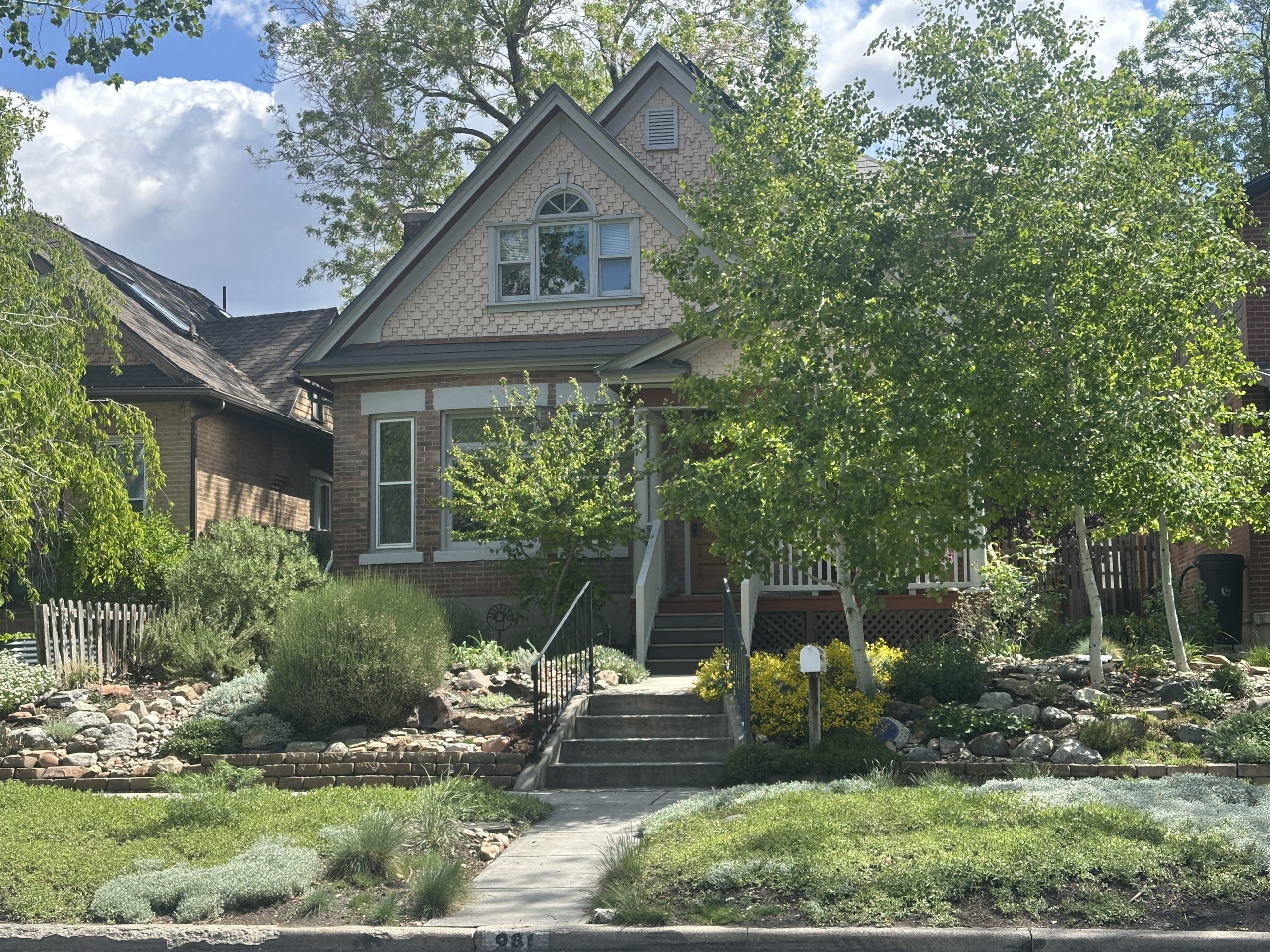
Last month, I sat with a young couple who grew up in Salt Lake City’s Rose Park neighborhood. They both have steady jobs. They both want to stay close to their parents, their church, their friends. And they both told me that they’ve started looking at homes in Tooele — not because they want to leave, but because a starter home in the neighborhood they grew up in simply doesn’t exist anymore.
Their story is not unusual. It is, in fact, the defining housing story of our city. And it’s exactly why I believe Expanding Housing Options — the zoning reform now before the Salt Lake City Planning Commission — represents one of the most promising, common-sense steps our city can take toward a better future.
Here is what Expanding Housing Options actually does, stripped of the noise: it allows property owners in our neighborhoods the option to build smaller starter homes, duplexes, triplexes, fourplexes, or townhomes on smaller lots. It does not eliminate single-family zoning. It does not force anyone to build anything. It does not bulldoze neighborhoods or erase their character. It simply removes some of the 1990s-era rules, oversized minimum lots, restrictive setbacks, blanket bans on anything but a single detached house, that quietly make it illegal to build the kind of modest, attainable housing that built Salt Lake City’s most beloved neighborhoods in the first place; the kind of homes that could open the door for first-time homebuyers, local workers who keep our city running, and seniors who want to downsize without leaving the community they’ve called home for decades.
Walk through the Avenues or Liberty Wells and you’ll find bungalow courts and corner duplexes tucked among detached single-family homes — quiet, human-scale homes nobody notices because they were built to fit in. We got those neighborhoods because, decades ago, it was legal to build that way. Expanding Housing Options simply restores that option, updated for today’s codes and today’s needs.
And where cities have repealed similar bans, the results aren’t theoretical. Houston scrapped its large-lot minimums decades ago and saw a wave of modest starter homes get built, saving buyers an estimated $18,000 per household — savings concentrated among the people who need them most. Portland’s middle-housing reforms have produced homes selling for up to a quarter-million dollars less than new detached construction nearby. And in Seattle, nearly a thousand small local builders — not national developers — have built close to 18,000 homes under similar rules since 2000. That’s no accident: small multifamily homes are sized for a local builder to take on and a construction loan a small business can actually get — not the huge financing that only makes sense for big national builders.This is not a policy that hands our neighborhoods over to corporate landlords. It’s a policy that hands them back to the electricians, teachers, and small builders who want to build something modest and sell it to a family down the street.
The payoff reaches beyond housing costs. The Salt Lake City School District has watched enrollment decline for years, in no small part because families can’t find the homes that fit their budget here. Every starter home we make possible is a chance to keep a family — and the tax dollars and community ties that come with them — inside city limits rather than pushed out. Every duplex closer to jobs or near a bus line is one less car commute. And every aging homeowner who gets to downsize on their own street, rather than leave the neighborhood they’ve loved for forty years, is proof that “housing options” is a kindness, not an abstraction.
I understand the hesitation some neighbors feel — change to the rules governing your own street can feel personal, even when nothing about your own home changes. But the bigger risk to neighborhood character isn’t a new duplex on the corner — it’s emptying a neighborhood of anyone who can’t afford to stay. Consider what inaction guarantees: not having enough homes to rent or buy creates cutthroat competition and drives up prices. Every starter home, duplex, or fourplex adds another option in a city where renters and buyers currently have very limited options. More options means more leverage for the people searching, not less.
The Salt Lake City Planning Commission will hold its public hearing on Expanding Housing Options on September 9. That hearing is the fulcrum point — the moment this proposal either arrives at the City Council with real momentum behind it, or stalls under the weight of a vocal few who’d rather nothing change at all.
So don’t just agree with this column. Act on it. Visit wasatchalc.org/eho and take our action alert — it takes two minutes to send a message to the Planning Commission and your City Councilmember, and it makes a real difference. Or if you represent an organization or group, join the dozen others who’ve already signed onto our letter to support new housing options.
Then mark Wednesday, September 9 on your calendar and come to the hearing in person if you can. A room full of supportive neighbors speaks volumes. If you’ve ever wished Salt Lake City had more housing options: a starter home, a duplex or fourplex near a bus line, or a place for your parents to age in place nearby, this is your fight. Turnout matters here; the commission hears from a small, consistent group of opponents at these meetings, and a room with a broader mix of voices changes the conversation.
This is our moment to decide what kind of city we want to be — one that quietly prices out its own children, or one confident enough to let its neighborhoods grow the way they always have: gently, modestly, and with room for everyone. A mix of homes, of all sizes and prices, will give more people a chance to own their home, build wealth, and provide solid foundations of economic stability and opportunity for themselves and the next generation.
If that’s the kind of city you want, I hope you’ll help make the case for it.
Turner C. Bitton is the Founding Executive Director of Wasatch Advocates for Livable Communities (WALC), a Salt Lake City-based housing policy and zoning reform advocacy organization.
This piece originally appeared on the Building Salt Lake website. Click here to read the original article.